Reaching Eryri, Bannau Brycheiniog and the Pembrokeshire Coast Without a Car
Wales has three national parks but only two have railway stations inside their boundaries. Here is what the train and bus network actually delivers for car-free visitors.
- Flag
-

- ISO code
- GB
- Currency
- GBP
Reaching Eryri, Bannau Brycheiniog and the Pembrokeshire Coast Without a Car
You step off the train at Abergavenny, bag on your shoulder, expecting the Brecon Beacons to be ten minutes away. They are not. The station sits on the Marches Line, the eastern rail spine of Bannau Brycheiniog. The park boundary is a twenty-minute taxi ride away, costing roughly £25. This is the first hard lesson of car-free travel in Wales: the railway circles the three national parks but rarely enters them. The buses that reach the interior run on school timetables, not tourist ones. The question is not which park has a station. All three do. The question is which park lets you walk a mountain trail, reach a waterfall, or stand on a coastal cliff using only a timed ticket and a service bus. The answer differs sharply by park.
Eryri, Bannau Brycheiniog and the Pembrokeshire Coast give you three very different public transport experiences. Pembrokeshire is the easiest. Eryri is possible with planning and a willingness to pay for seasonal buses. Bannau Brycheiniog is the hardest, a park designed for the driver, where buses connect towns but skip trailheads, and your legs do the connecting that public transport cannot. The South Wales Main Line, the Marches Line and the Heart of Wales Line all serve the park's edges. None drops you on a path. The Cambrian Coast Line and the Conwy Valley Line get you closer to Eryri's interior. The West Wales lines run directly into Pembrokeshire's coastal towns. The difference is not the railway. The difference is what happens after you alight.
Plan around the Explore Wales Pass if you intend to use trains and buses together. The 2026 rate was £109 for an adult, valid for four days of travel within an eight-day period on all Transport for Wales rail services and on most scheduled buses across Wales. It does not cover National Express or Megabus. Buy it from Transport for Wales online before departure. The pass pays for itself on a Swansea to Abergavenny return plus two bus journeys. It removes the friction of buying separate tickets at rural stations where the machine is broken and the cafe closed. But the pass only works where the buses run. It does not conjure a bus that does not exist. Check Traveline Cymru for live times before you travel; timetables shift and rural routes are re-tendered constantly.


Bannau Brycheiniog: the Rail Ring That Does Not Enter
Three railway stops offer legal access to the park. Abergavenny on the Marches Line, Merthyr Tydfil on the Valleys lines, and Llandovery on the Heart of Wales Line. All three sit on the boundary. None puts you inside. From Abergavenny, a taxi to the Storey Arms costs roughly £30 and takes twenty minutes. From Merthyr Tydfil, the same taxi ride to the Four Waterfalls Walk car park runs about £20 and takes fifteen minutes. From Llandovery, a taxi to the start of the Llyn y Fan Fach walk costs £25 and takes twenty-five minutes. These are not optional expenses. The bus network does not serve those starting points.
The TrawsCymru T4 runs between Cardiff and Aberystwyth, passing through Brecon. The T14 runs between Cardiff and Merthyr Tydfil. Both connect towns. Neither stops at a single significant trailhead. The 14 bus winds through Waterfall Country but runs only a handful of times a day, timed for school pick-up and shopping trips, not for hikers starting a gorge walk at 9 AM and finishing at 4 PM. Traveline Cymru (www.traveline.cymru or 0800 464 0000) is the definitive source for times, but expect routes that operate one morning journey and one late afternoon one. That is the service pattern in rural Wales. The network is shrinking, not growing.
What You Can Actually Do Without A Car
You can stay in Brecon town itself. The canal walk, the bookshops, the pubs are all walkable from the bus stop. You can take a taxi to a single starting point, walk a loop, and taxi back. You can join a guided group that provides transport. What you cannot do is move between the districts. The Central Beacons, Waterfall Country and the Black Mountain are hours apart on foot and unconnected by bus. The common mistake is underestimating the distance between the three main mountain ranges. Trying to tick off Pen y Fan, the Black Mountain and the waterfalls in a single day means you spend more time in a taxi than on the trail. Budget a full day per district. Accept that you will pay for a taxi each day. The minimum stay is three full days: one for the central Beacons horseshoe, one for Waterfall Country, one for the Black Mountain. If a taxi back from Pen y Fan at 4 PM costs £35, factor that into the budget.
The park is not for the casual day tripper without a car. The mobile signal vanishes in Waterfall Country. The Black Mountain is a dead zone. EE and Vodafone offer the least patchy 4G on the ridges but fade quickly. Download offline OS Maps or AllTrails before leaving your accommodation. Do not rely on cafe Wi-Fi at the start of the walk, because there often is not a cafe. Pen y Fan can feel like a queue even on a Tuesday in July. Arrive at the Storey Arms by 8 AM or skip it entirely. The Royal Welsh Show week in late July floods every B&B within a 40-mile radius; avoid it. The Brecon Jazz Festival weekend in August crowds the pubs and the roads. November is reliably wet, grey, and short. The park receives 1,500 to 2,500 mm of rain per year and the cloud base sits below 600 metres on roughly 200 days annually. Bring waterproofs. Bring a paper map. The weather determines whether the itinerary works.
Eryri: Rail Penetration with a Seasonal Catch
Eryri's rail access is better than Bannau Brycheiniog's, but still requires a secondary bus or a willingness to walk from the valley to the ridge. The Cambrian Coast Line runs along the park's southern and western edge, serving Machynlleth, Porthmadog, Harlech and Barmouth. The Conwy Valley Line reaches Betws y Coed and Blaenau Ffestiniog, running directly through the eastern side. Bangor sits on the North Wales Main Line and is the railhead for the northern approach to Snowdon. From Bangor, the Snowdon Sherpa bus network operates routes that connect the main starting points: the Llanberis Path, the Pyg Track and the Miners Track. The Sherpa runs from spring through October, with reduced frequencies in the shoulder months. In winter, it stops entirely.
The Sherpa network is the single most useful public transport asset in any of the three parks. A day ticket costs around £5 and covers all the routes radiating from Betws y Coed, Llanberis and Pen y Pass. Buses run roughly every 30 to 60 minutes in high season. They are timed to connect with trains at Betws y Coed and Llanberis. If you are walking Snowdon, the Sherpa from Llanberis to Pen y Pass drops you at the Pyg Track, saving a 90-minute road walk. Book the Pen y Pass car park in advance if you drive, but you will not need to because you are on the bus. That is the advantage of the public transport approach: you skip the 8 AM scramble for a space and the parking fee.
The Limitations You Cannot Ignore
The Sherpa does not run in November, December or January. In February and March the service is limited to weekends and school holidays. Visit Eryri in winter and you need a taxi from Bangor or Betws y Coed to the start of the walk. The cost is comparable to Bannau Brycheiniog: roughly £30 to Pen y Pass from Bangor. The Conwy Valley Line runs year-round but with only a handful of trains a day in each direction. Miss the afternoon departure at Blaenau Ffestiniog and you wait hours. The Cambrian Coast Line is similarly infrequent. Plan the entire day around the train time, not the walk time. The worst outcome is finishing a ridge traverse at 6 PM in darkness and wind, with no bus, no train and no mobile signal to call a taxi. The rainfall in Eryri is higher than any other park in Wales. Snowdon summit averages over 4,000 mm per year. Gusts over 50 mph occur on fifty or more days annually. The park is not a fair-weather destination. It is a destination where you schedule a flexible itinerary and accept that some days the cloud base sits at 600 metres and the walk is a bad idea.
Book accommodation in Betws y Coed or Llanberis for the best bus access. Both villages have grocery shops, pubs and gear shops. Llanberis gives you the quickest route to the Snowdon starting points via the Sherpa. Betws y Coed sits on the Conwy Valley Line and connects to the rest of the Sherpa network. The Explore Wales Pass covers the train journey from Bangor to Betws y Coed and from Machynlleth to Porthmadog. It also covers the Sherpa buses, making a four-day trip efficient: train from Bangor to Llanberis, bus to Pen y Pass, walk, bus back, train to Betws y Coed, repeat on a different route. That sequence works. It is the closest the car-free visitor gets to a day in a Welsh national park where the connections actually line up.


The Pembrokeshire Coast: the Park You Walk from the Station
Pembrokeshire Coast National Park is the only one of the three where you step off the train and walk directly onto the park path. The West Wales lines run from Swansea to Haverfordwest, Milford Haven, Pembroke, Tenby, Saundersfoot and Fishguard. The line terminates at Haverfordwest, the county town, but the branch lines reach the shore. Tenby station is a ten-minute walk from the Coast Path. Saundersfoot station is a five-minute walk from the beach. Pembroke station is a twenty-minute walk from Pembroke Castle and the start of the coastal section. The park receives 800 to 1,200 mm of rain per year, roughly a third of Eryri's rainfall. Summer temperatures average 15 to 20 degrees Celsius. The weather is more reliable, the walking season longer, and the penalties for being stranded less severe.
You do not need a dedicated bus network here. The Coast Path runs the length of the park boundary. Walk from Tenby to Saundersfoot on the path in two hours. Walk from Haverfordwest to the coast in an hour. TfW trains run roughly every two hours on the West Wales lines, and the Explore Wales Pass covers them. The buses that supplement the railway, the T5 from Haverfordwest to St Davids and the coastal service from Tenby to Pembroke, run more frequently than the interior buses of Bannau Brycheiniog because they serve schools, shops and tourist traffic combined. They are not seasonal. They run year-round. The park's shape, a narrow coastal strip, means you are never far from a road and a bus stop.
The Trade-Off
The trade-off is that the Pembrokeshire Coast lacks high mountain walking. The terrain is low. The cliffs are vertical, but the altitude gain per mile is modest. If you want peaks, go to Eryri or Bannau Brycheiniog. If you want a linear long-distance walk with daily train access, a pub every four miles and the ability to bail out at any stop between Tenby and Fishguard, come here. This is the driest park and the least challenging for navigation. The Coast Path is waymarked every few hundred metres. Cloud base issues do not apply below the cliff tops. The main risk is wind, not visibility. Pembrokeshire is the honest answer for the car-free traveller who wants to hike a national park without a taxi budget.
Places in Wales
-
 Brecon Beacons
Bannau Brycheiniog spans four mountain ranges with only three railheads and two bus corridors linking them. Here is how to navigate the park without a car.
Brecon Beacons
Bannau Brycheiniog spans four mountain ranges with only three railheads and two bus corridors linking them. Here is how to navigate the park without a car.
-
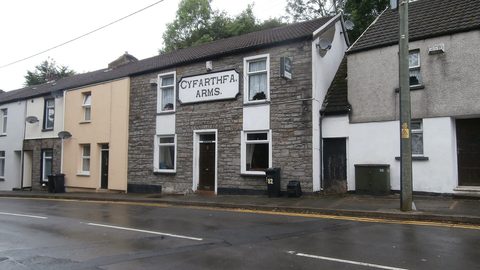 Merthyr Tydfil
 railway station is the southern railhead for Bannau Brycheiniog, with buses north to Brecon and Pen y Fan trailheads, plus industrial heritage on foot.
Merthyr Tydfil
Merthyr Tydfil railway station is the southern railhead for Bannau Brycheiniog, with buses north to Brecon and Pen y Fan trailheads, plus industrial heritage on foot.
Common Questions
Can I reach all three national parks by train alone?
Yes, but only the Pembrokeshire Coast lets you walk from the station onto the park path. Eryri and Bannau Brycheiniog require a bus or taxi from the station to the trailhead. Budget for that transfer. The Explore Wales Pass covers the connecting buses in Eryri but not taxis.
Which park is hardest to visit without a car?
Bannau Brycheiniog. The bus network connects market towns but skips every significant trailhead. You will pay for taxis to reach Pen y Fan, Waterfall Country, or the Black Mountain. Expect £25 to £35 per ride. Visit Pembrokeshire or Eryri for easier car-free access.
Is the Explore Wales Pass worth it for a park trip?
Yes. The 2026 adult rate was £109 for four days of unlimited travel on Transport for Wales trains and most scheduled buses. That covers the train from Cardiff to Bangor and the Eryri Sherpa buses. It does not cover National Express or taxis. Buy it online before you arrive.
What happens if I miss the last bus in a park?
You wait or you walk. In Eryri the last Sherpa bus from Pen y Pass to Llanberis runs around 6 PM. In Bannau Brycheiniog the last bus from Brecon to Abergavenny may run at 4:30 PM. Check Traveline Cymru before you set out. Mobile signal vanishes in the valleys. Carry a paper timetable.
Read next
-
Brecon Beacons
Bannau Brycheiniog spans four mountain ranges with only three railheads and two bus corridors linking them. Here is how to navigate the park without a car.
-
Merthyr Tydfil
Merthyr Tydfil railway station is the southern railhead for Bannau Brycheiniog, with buses north to Brecon and Pen y Fan trailheads, plus industrial heritage on foot.
-
 Britain's National Parks and What Makes the Welsh Three Different
Britain has fifteen national parks but the three in Wales operate by different rules for the car-free visitor, from military ranges to sparse rail corridors.
Britain's National Parks and What Makes the Welsh Three Different
Britain has fifteen national parks but the three in Wales operate by different rules for the car-free visitor, from military ranges to sparse rail corridors.